


How a philosophy shift brought BMW to new heights in 2026
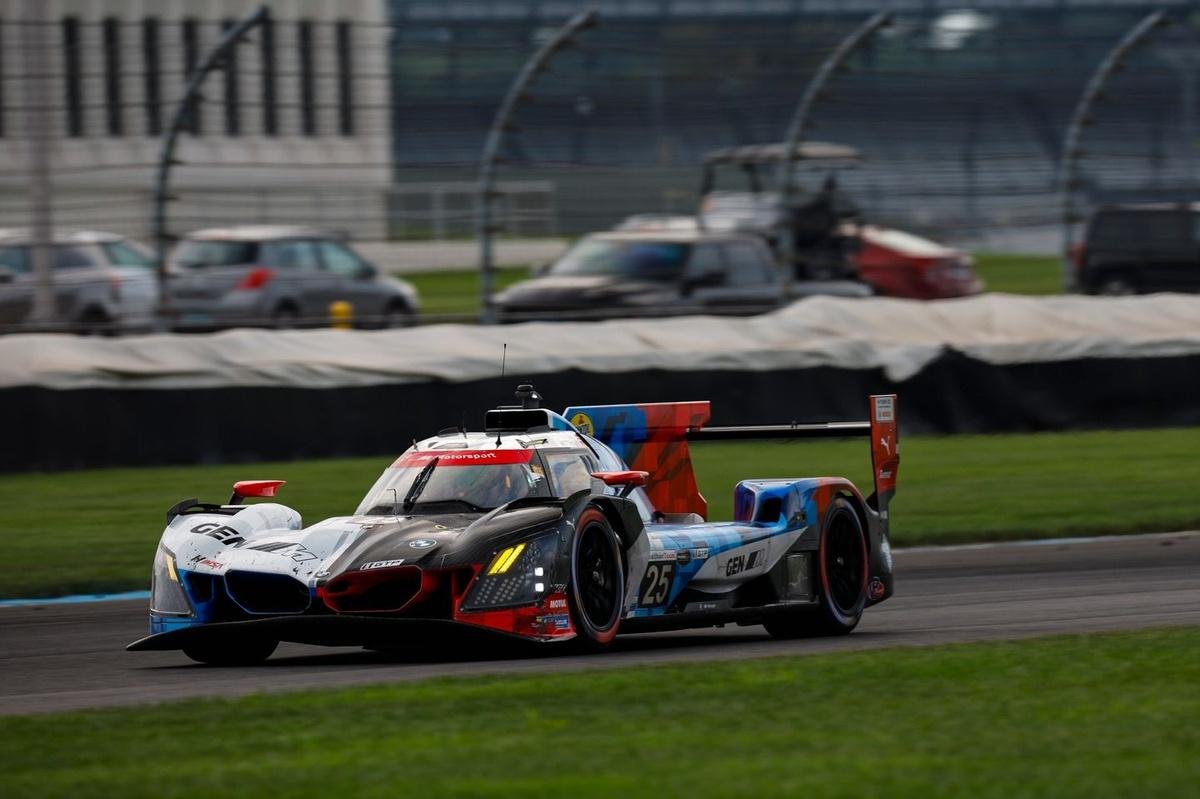
Heading into the 2026 season, BMW was under immense pressure. After three years of limited success, the update package for the M Hybrid V8 really needed to deliver.
In IMSA, the challenge was compounded by a late-notice team switch from RLL to WRT. Now, after a full season with the updated LMDh car, it is clear that the hard work has paid off.
With the revised Evo package, BMW deliberately shifted its focus. While Dries Vanthoor's impressive streak of four pole positions in 2025 turned heads, the big points only get handed out on race day.
"There were essentially two main focus areas. We addressed durability issues and the drivability of the car. In the first year, the car was sometimes difficult to drive. You could see that from the fact that the drivers repeatedly made mistakes or lost the car", Marco Wittmann told Motorsport.com.
"We succeeded in improving the drivability. I would claim that we might not have had the absolute qualifying performance of the previous year anymore, but we were stronger in the race because the car was much more consistent to drive. Of course, it's nice to be at the front in qualifying, but in the end, it's the race result that counts."
The concept proved its worth most visibly in the FIA WEC, where WRT captured victories at Spa-Francorchamps and Sao Paulo, alongside a strong performance at Le Mans when Robin Frijns, Rene Rast, and Sheldon van der Linde finished just 10.913 seconds behind the winning Toyota—the closest finish in the race ever without intervention from the pit lane.
In the fiercely contested closing stages of IMSA races, the refined drivability of the prototype also became an essential asset, culminating in a GTP victory for Sheldon van der Linde and Dries Vanthoor at Indianapolis. However, extracting the maximum performance out of the update across different track layouts took time.
"Especially at the beginning of the season, we struggled a bit to get the car into its optimal working window at all times," Wittmann said, referencing the team's now almost legendary recovery effort at the 24 Hours of Daytona after disastrous practice sessions. "As the year went on, we managed to do that better and better."
#25 BMW M Team WRT BMW M Hybrid V8: Philipp Eng, Marco Wittmann
Photo by: Brandon Badraoui / Lumen via Getty Images
In IMSA, WRT faced the additional hurdle of building up its North American operations on an extremely tight schedule.
"As far as I remember, setting up the team in the US only started in October or November, including moving into the new workshop. Considering that, WRT really did a fantastic job," Wittmann said.
"It was a huge task to be ready in time for Daytona, but we handled it well. Right at the first IMSA race in Daytona, we were able to get on the podium. For me personally, the highlights were the front-row qualifying in Long Beach and the podium finishes in Detroit and Laguna Seca."
Wittmann and his Austrian teammate Philipp Eng, who is departing BMW, were unable to match their early-season podium pace in the second half of the year, while van der Linde and Vanthoor hit their stride in the final races.
That dynamic underlined one of BMW's main issues in IMSA in 2026: often one car was fast while the other struggled, leaving them rarely in a position to work together.
"You could see that as a team we achieved many podiums and good results, but the success was often divided," Wittmann said.
"Sometimes the #24 was ahead, sometimes the #25. It was ike that for almost the entire season. In the end, we were perhaps missing a bit of the necessary luck on our side."
Wittmann did not shy away from self-criticism regarding the team's momentum: "We had race weekends where everything just didn't come together, both in terms of performance and how the race unfolded."
"We all know that things often get very wild in IMSA. You have to be in a good position in the final hour of the race, and sometimes we weren't quite there."
Despite the setbacks, Wittmann described it as a "cool year," pointing out positive shifts in driving standards across the championship.
"This is just America. People race differently there from Europe, but even in America, they are looking more toward Europe now and have adjusted a few things," he said.
"For example, there has been a stronger focus on leaving the opponent racing room. Two or three years ago it was completely different. You could push someone out, and whether they ended up in the gravel didn't matter. That has changed, and I think that's good."
"At the same time, the frequent full-course cautions and safety car restarts add real spice toward the end of a race. That's exactly what makes IMSA so exciting and cool.”
“Even after having problems, you can often unlap yourself. You really only need to be there in the last hour or two, which creates high drama, even if it makes the racing wild."
#25 BMW M Team WRT BMW M Hybrid V8: Philipp Eng, Marco Wittmann, Frederik Vesti
Photo by: Jake Galstad / Lumen via Getty Images
That wild nature was on full display at the Petit Le Mans finale when Kevin Magnussen went airborne over Alex Palou's Acura after Palou moved across on cold tires into the first braking zone.
"The main thing is that Kevin is okay," Wittmann said of the scary incident that prematurely ended their race.
With the brief IMSA offseason underway, preparations are already building toward the 2027 season opener in January, where WRT will aim to translate its drivability gains into sustained championship contention on North American soil just like in FIA WEC.
What would you like to see on Motorsport.com?
- The Motorsport.com Team
.png)



.png)

 (1).png)